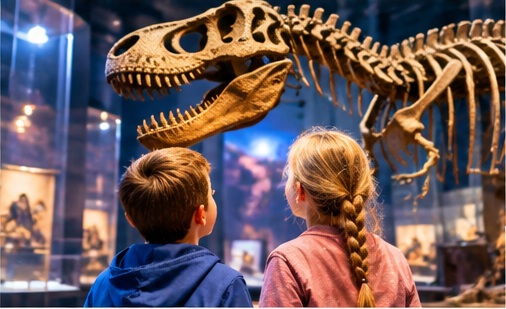
A rainy day can be a wonderful excuse to explore a museum, but children rarely experience exhibits the same way adults do. A successful visit is not about seeing every room. It is about giving young explorers time to notice what interests them.
Before leaving, check the museum's current hours, admission policies, accessibility details, and whether hands-on areas are open. Choose one or two exhibits instead of planning an exhausting tour. A snack and a realistic departure time can prevent an enjoyable outing from becoming a marathon.
Turn the visit into a gentle scavenger hunt: find something enormous, something smaller than your hand, an object older than your grandparents, and one display that raises a question. Let children sketch a favorite discovery or describe it in their own words.
Ask open-ended questions. “What do you think this was used for?” and “What surprised you?” invite curiosity without turning the afternoon into a quiz. Younger children may need movement breaks; older children may want extra time reading a single display.
Before leaving, ask everyone to name one thing they would like to learn more about. The best museum visits often continue at home with a library book, a drawing, or a conversation around dinner. Curiosity is the souvenir that lasts.