The Grocery Shelf Math That Can Save You Money
A few small comparisons can help a grocery budget stretch further.
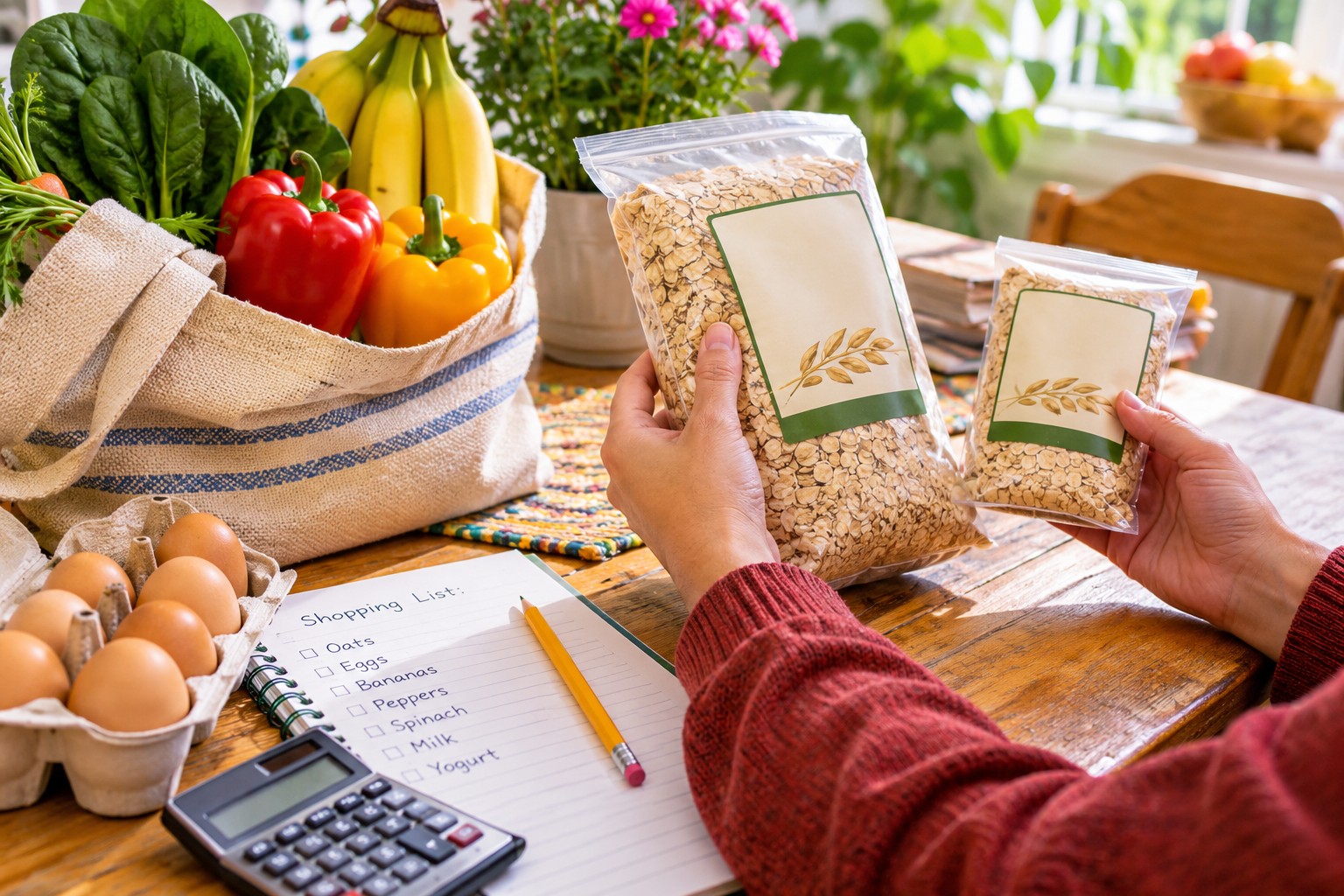
A shelf tag can tell two very different stories: the price of the package and the price of what is inside. When grocery costs feel relentless, learning to compare those numbers can help.
Look for the unit price, often shown per ounce, pound or count. A larger box is not automatically the better deal, especially if some of it will spoil before you use it. Compare the same unit, then choose the amount your household can realistically finish.
Start with two or three staples you buy often rather than trying to calculate every aisle. Oats, rice, pasta, yogurt and cleaning supplies are useful places to practice. Check store-brand alternatives and consider whether a sale requires buying more than you need.
Plan a couple of flexible meals around ingredients that overlap. Carrots can appear in soup, stir-fry and lunchboxes; a bag of frozen vegetables can support several dinners without the same spoilage pressure as fresh produce.
Saving money is not a contest to see who can spend the least. The goal is to make your budget work for your real life, including convenience on the busiest evenings.
Sharing our family with yours — one beautifully imperfect day at a time.